
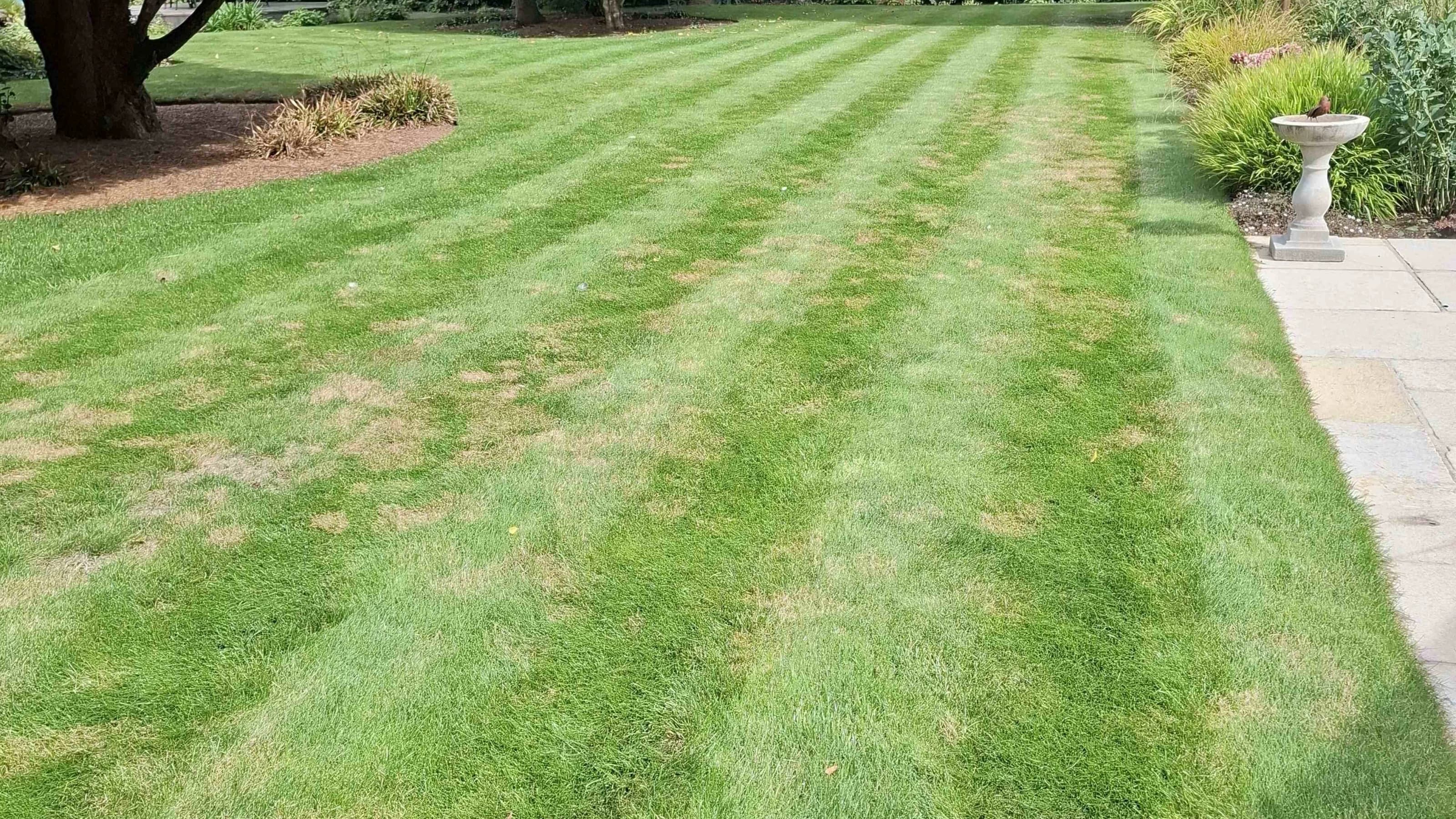
Lawn diseases are a sign that the lawn is under stress. This could be from being cut too short, lacking in nutrition or due to certain weather conditions. The spores of fungal diseases lay dormant in lawns and only cause problems when the lawn is weakened or when the climatic conditions are right.
Lawn diseases are a sign that the lawn is under stress. This could be from being cut too short, lacking in nutrition or due to certain weather conditions. The spores of fungal diseases lay dormant in lawns and only cause problems when the lawn is weakened or when the climatic conditions are right.
We have provided a list of common diseases that may appear in your lawn, or that you may have already noticed appear without knowing what it was. If you think you have any of these diseases in your lawn, please get in touch as we may be able to help and/or provide advice
There are several lawn diseases that can affect the health and appearance of your lawn throughout the year. Most of these are fungal infections that develop when conditions become favourable, such as prolonged damp weather, poor airflow, or when the lawn is under stress. Identifying these issues early can help to prevent further damage and allow for quicker recovery. Below, we have listed some of the most common lawn diseases, along with their causes, symptoms, and solutions.
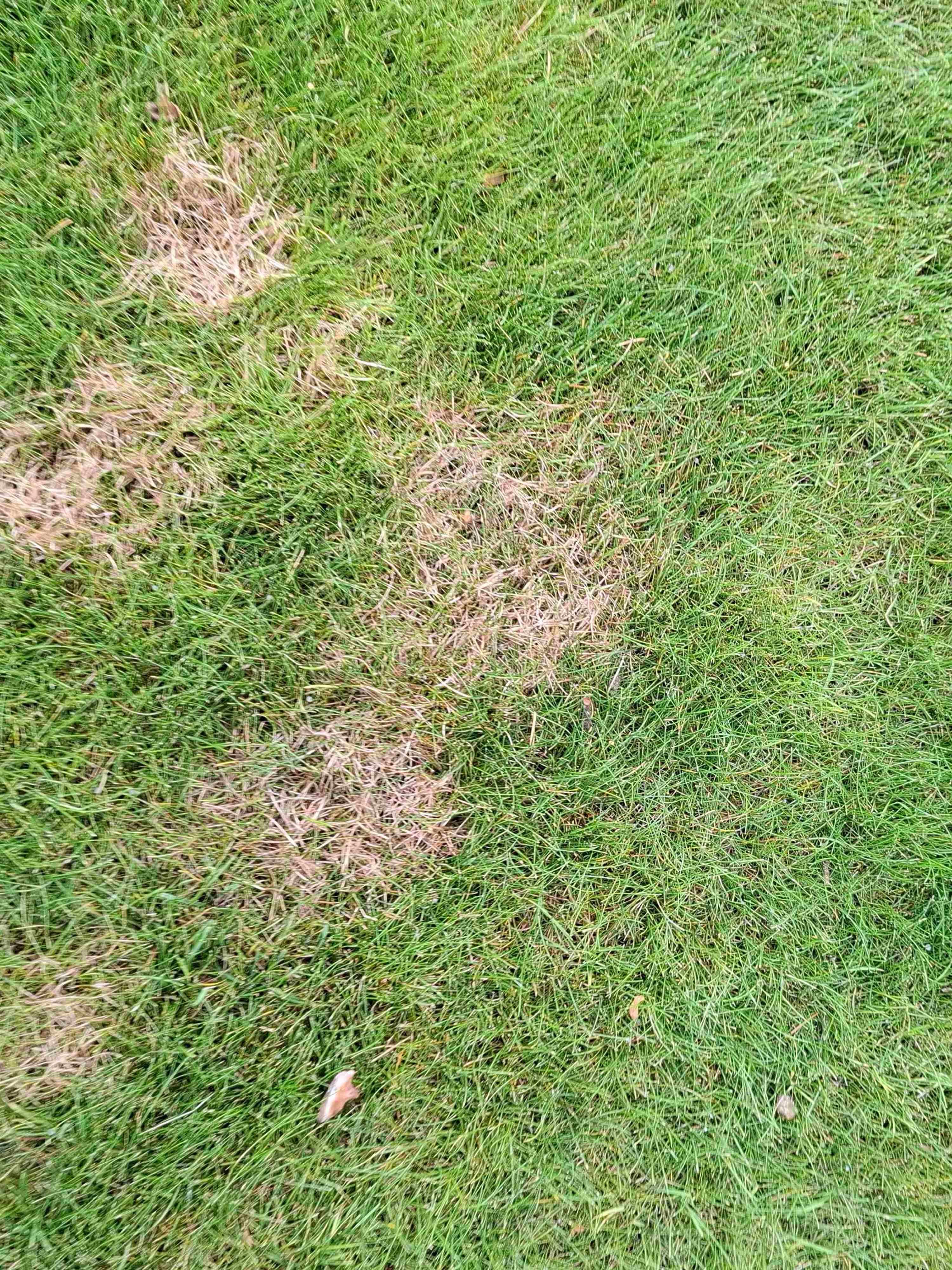
This is a very common lawn disease which is becoming more prevalent with the changing and unpredictable weather patterns we see today.
Red Thread is a fungal infection that attacks the lawn in two stages. It can form fine red strands or threads on the grass blades. This is fungal mycelium. It can also produce pink candy floss like fluff where the leaf blades meet. As the infection spreads, it forms patches of thin straw-coloured grass which can have a pinkish appearance. These patches of infection can be spread across the lawn which can cause unsightly patches. You should look out for patches of thin straw-coloured grass with either or both stages of infection present.
The weather plays an important part in the formation of Red Thread. Hot, dry summers followed by mild and wet autumn weather creates the ideal environment for Red Thread to flourish. You may also see it if we have a mild but wet spring/early summer. A lawn that is very thick with thatch can also add to the problem, creating restricted air circulation in the lawn. Lack of air, combined with wet mild conditions will inevitably cause infection.
Red Thread does not usually kill the grass. Sometimes the issue can be lack of nutrition and you may find that the problem improves following a scheduled feed. The nitrogen encourages faster growth which can help to `grow out` the infected grass. A TopGrass Red Thread Treatment can further help to green up the lawn and prevent further spores activating by hardening off the turf and making it more resilient to infection.
Regular Scarification is important to ensure that the lawn doesn’t get too thatchy. Scarifying helps to improve the air flow through the lawn, which in turn helps to reduce the possibility of infections.
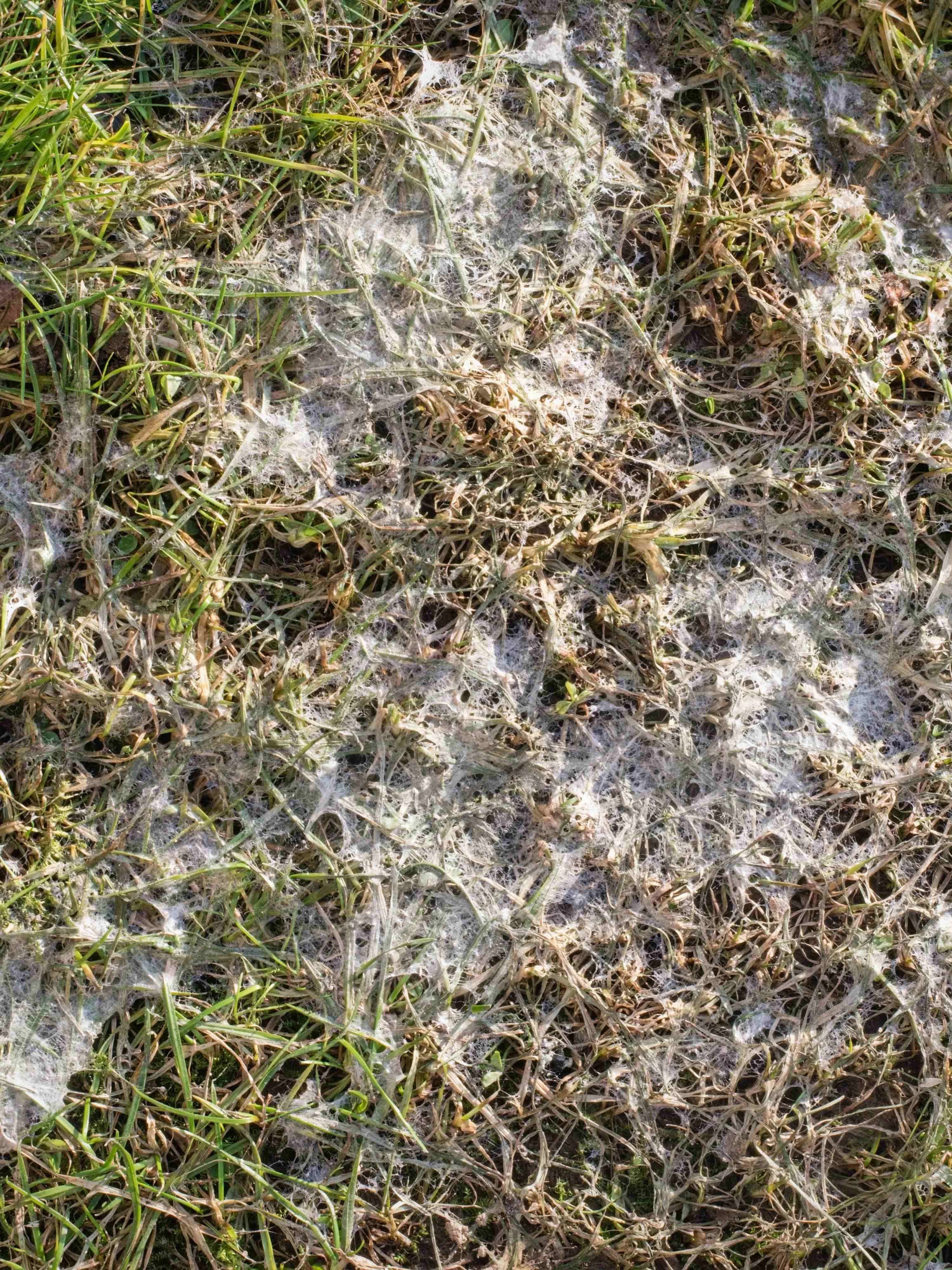
This disease usually appears in cooler weather between September and March and is also known as Snow Mould. Unlike Red Thread, this infection can be fatal to the grass. It spreads from the leaf of the plant to the crown and then kills it off very rapidly.
It is a fungus which lies dormant in the summer in the thatch of a lawn and in the soil. When we get a very damp autumn and winter, the spores will activate, and white patches of fine, cotton-like strands appear on the turf. If a lawn is infected with Fusarium, the first signs will be small orange patches around the size of a tennis ball which expand into larger patches. On close inspection you will see the white Mycelium strands which look like candyfloss.
You will typically start seeing Fusarium when temperatures start to drop in the autumn and grass growth is slowing down. This lawn disease is common in cooler conditions and forms pale circular patches on lawns. This disease tends to affect old turf or fine grasses. High levels of thatch, soil compaction, damp environments, humid weather and general lack of airflow can all encourage the disease. A mild autumn followed by an early winter can also be a factor, as can applying too much Nitrogen at this time of year.
Issues with Fusarium need to be identified quickly as a lawn can start dying off within 48 hours of infection. An application of the TopGrass Red Thread Treatment can help in the short term, along with trying to keep the grass as dry as possible during the autumn and winter. Any damaged grass will need to be replaced/ re-seeded in the spring.
The same principles as Red Thread will help to reduce the likelihood of a Fusarium infection. Regular scarification to keep thatch levels under control Aeration to reduce compaction and help with drainage.
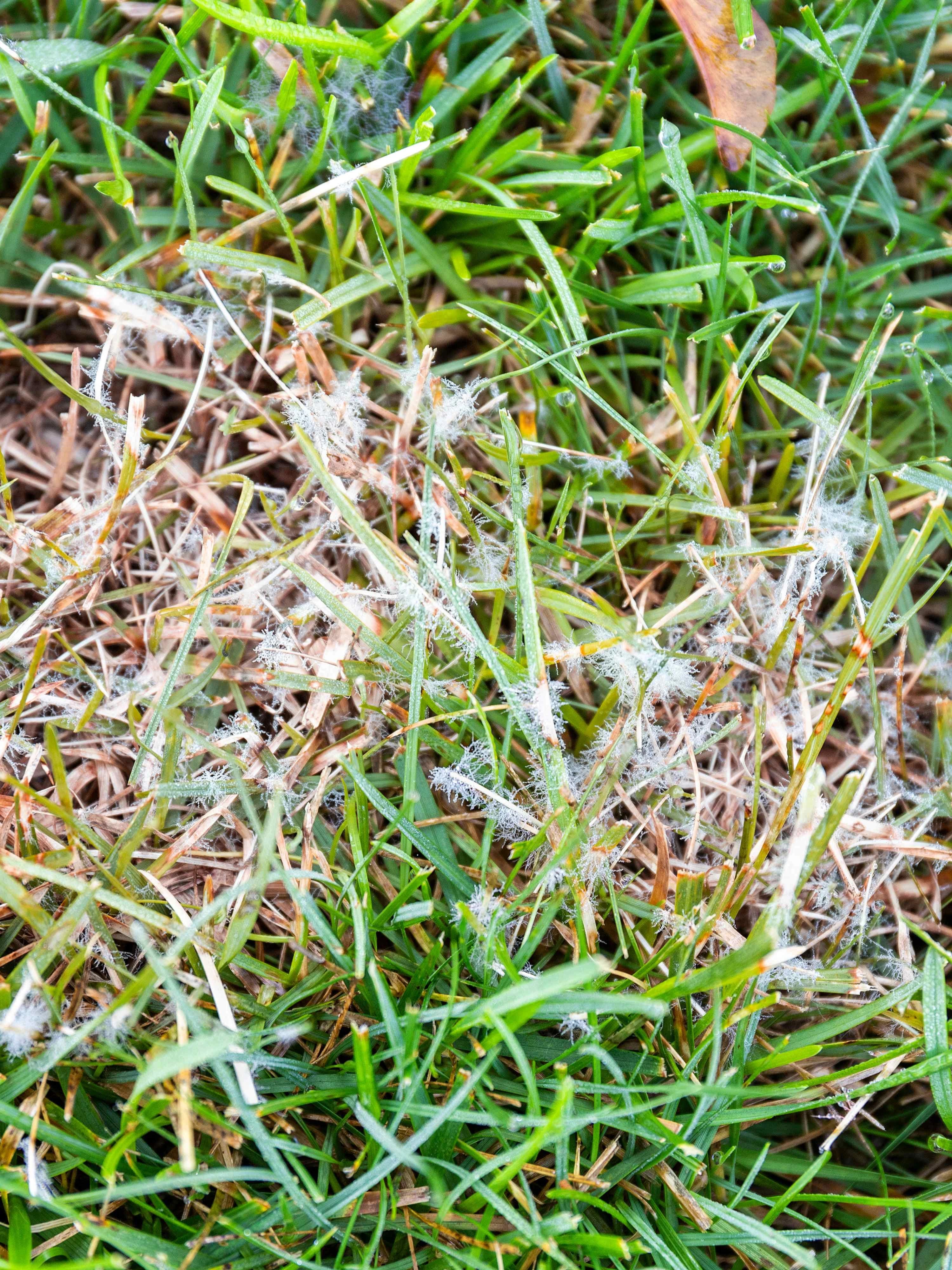
What is Dollar Spot? This disease presents itself as circular pale patches that can join up to form larger, irregular areas in humid periods. This is caused by a fungal pathogen that affects the grass leaf but does not affect the roots. This disease produces something called a mycelium which spreads from area to area.
What causes Dollar Spot and when? This disease can appear between early spring and late autumn. It is most active in warm and humid conditions. Dollar spot can prosper if the lawn is overly stressed through mowing the lawn at an exceptionally low height or through drought conditions. High amounts of thatch in the lawn can also exacerbate stress on the lawn. If nitrogen levels are too low in the soil, then lawns are more vulnerable to dollar spot disease and if the lawn is infected, it will take considerably longer for the lawn to fully recover. Additionally, if there are excessive levels of nitrogen in the soil, this can have adverse consequence of multiplying the number of disease infected patches in the lawn.
What is the solution to Dollar Spot? It is important to maintain a healthy level of nitrogen in the soil with correctly selected fertilisers that are most suitable to the condition of the lawn. Oxygenate the soil with regular aerations.
How to prevent Dollar Spot? If thatch layers in the lawn are dense, then removal should be considered through scarification to help prevent dollar spot.
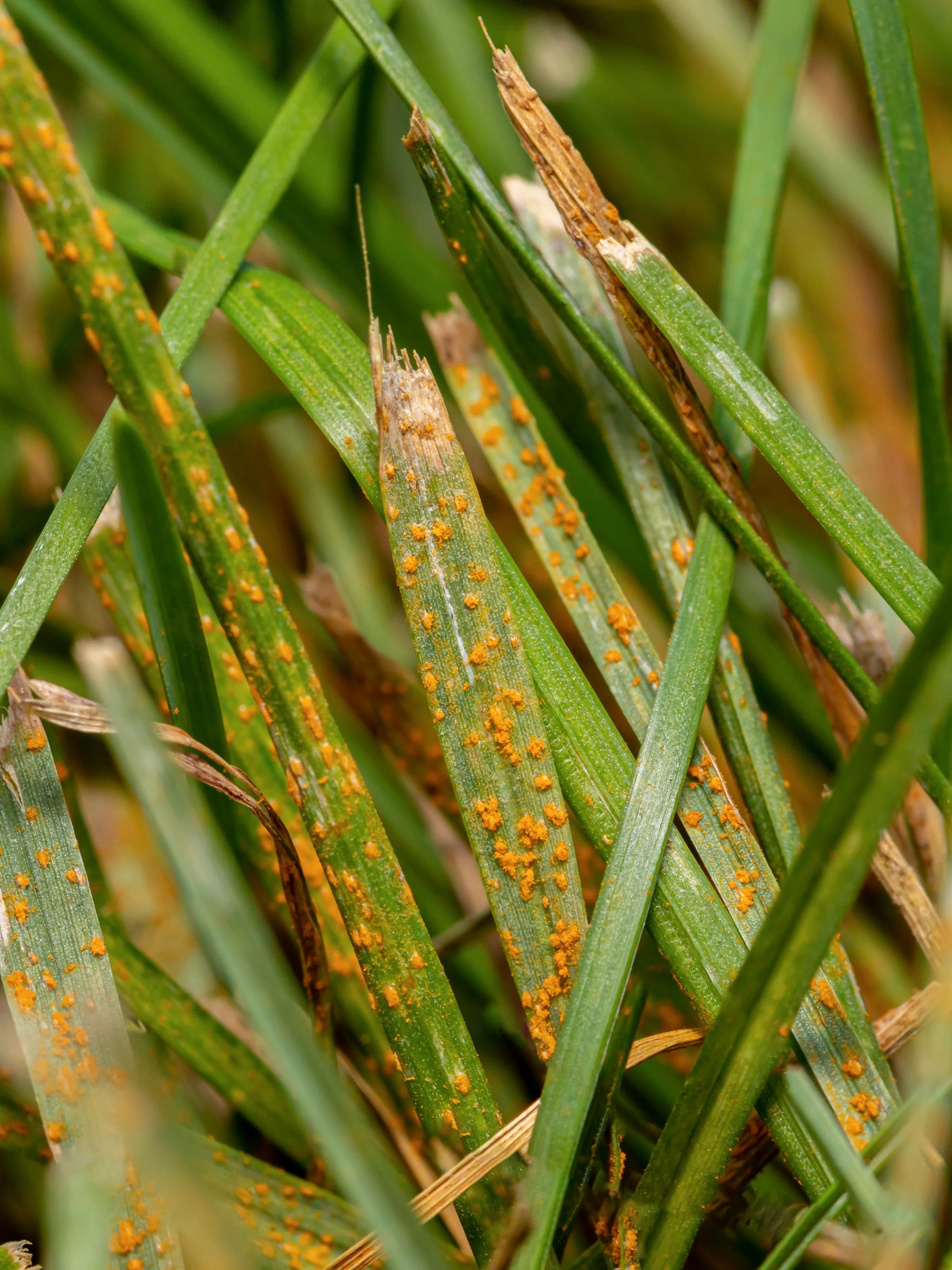
What is Lawn Rust? Lawn rust is quite a common fungal infection and usually appears in late summer and causes yellow/orange discolouration of the grass blades which once infected can spread quite quickly. It is particularly common in the coarser grass varieties. Like Red Thread, this type of infection will not usually kill the grass but can look unsightly. Rust can actually weaken the grass and leave it susceptible to other lawn diseases. The disease spreads through fungal spores.
When does Lawn Rust occur? This disease enjoys mild and wet conditions. It generally occurs when the grass’ growth is slowed, so particularly during late summer or early autumn, when we tend to experience either dry weather or when the lawn is low in nitrogen.
What is the solution to Lawn Rust? Rust can start appearing when the lawn is in need of water so can appear following a drought once the lawn is growing again. An application of nitrogen (within a fertiliser treatment) can help to green up the lawn and a Red Thread Treatment will help to increase the lawn’s resilience and improve colour. A lawn can usually recover with regular fertilisation which provides nutrients for the lawn.
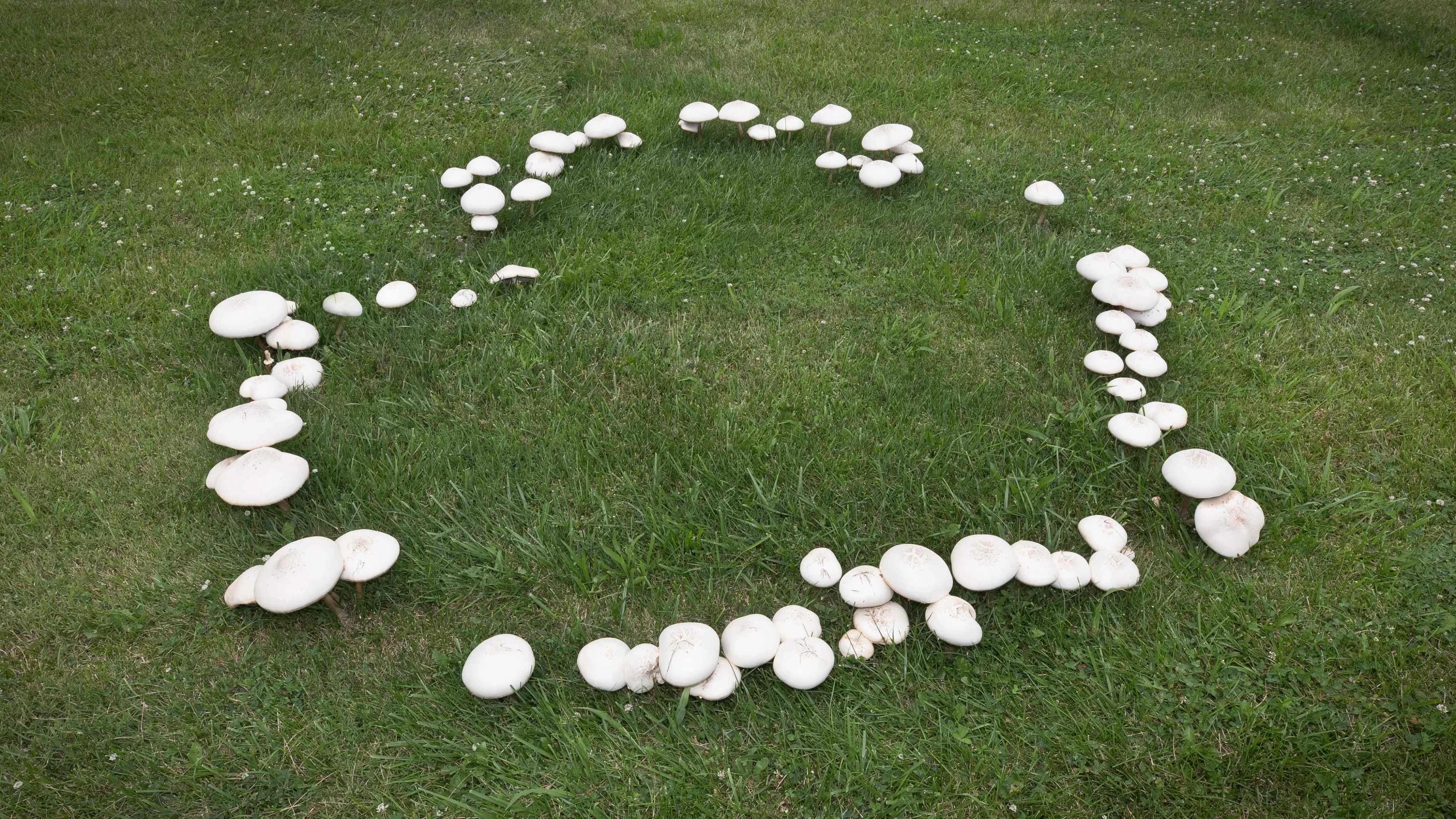
A fairy ring is caused by a fungus in the soil and presents as a ring shaped area of dark green growth or a ring shaped bare patch sometimes with toadstools and dark green edges. This type of fungal infection is very difficult to control as the fungus can live deep down in the soil profile.
What are Fairy Rings? The fungus thrives in high organic matter soils, buried tree stumps and other organic debris such as thatch. It produces a white mycelium that is hydrophobic. The effects of this on the soil are similar to dry patch in that the soil struggles to absorb water.
The rings can vary in size from small to covering the whole lawn.
In many cases, the presence of these fungi can be confirmed by smelling the rootzone which will take on a characteristic musty smell. Although all fairy rings will start from a single point and increase in size annually, eventually forming recognisable rings, the growth of these rings will not stop unless the fungus hits a solid surface or disturbed ground. As rings grow together (or coalesce), the definite ring pattern will change to become broken rings, arcs or ribbons across the turf surface.
There are 3 types of fairy ring which are:
What causes Fairy Rings? Superficial fairy rings are caused by fungal activity in the thatch (hence, also known as thatch fungi). They can cause rings or patches of yellowed or greened-up turf and may also be associated with slight depressions of the turf surface. Fungal fruiting bodies will not be seen with superficial fairy rings.
What is the solution to Fairy Rings? Fairy rings are extremely difficult to treat and there is no permanent solution to stop them reappearing. However, you can try the following:
As you can see there are some solutions which can alleviate the symptoms of a fairy ring but none of the above will guarantee the fairy ring does not return.
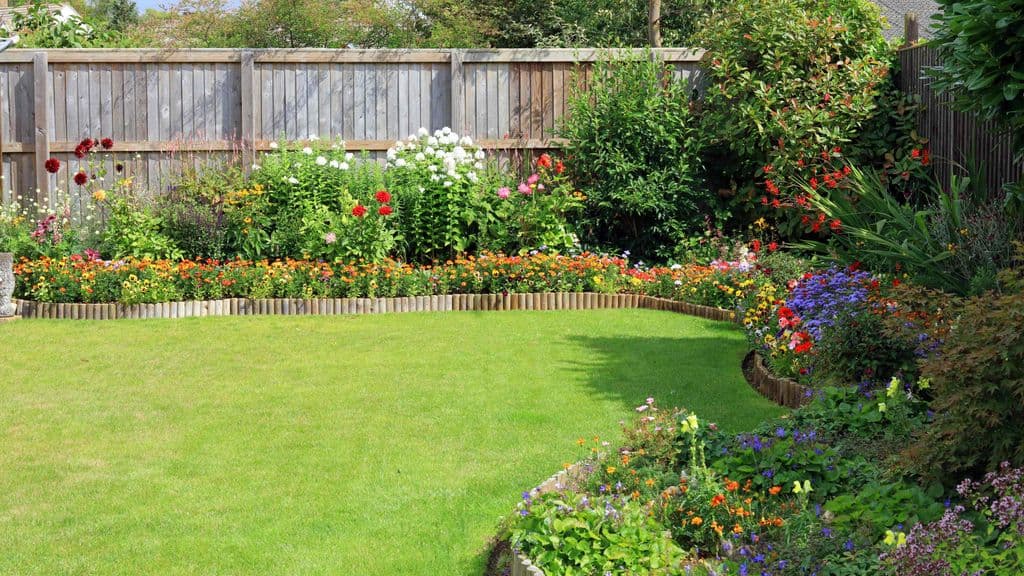
This is your in-depth monthly guide to lawn care!
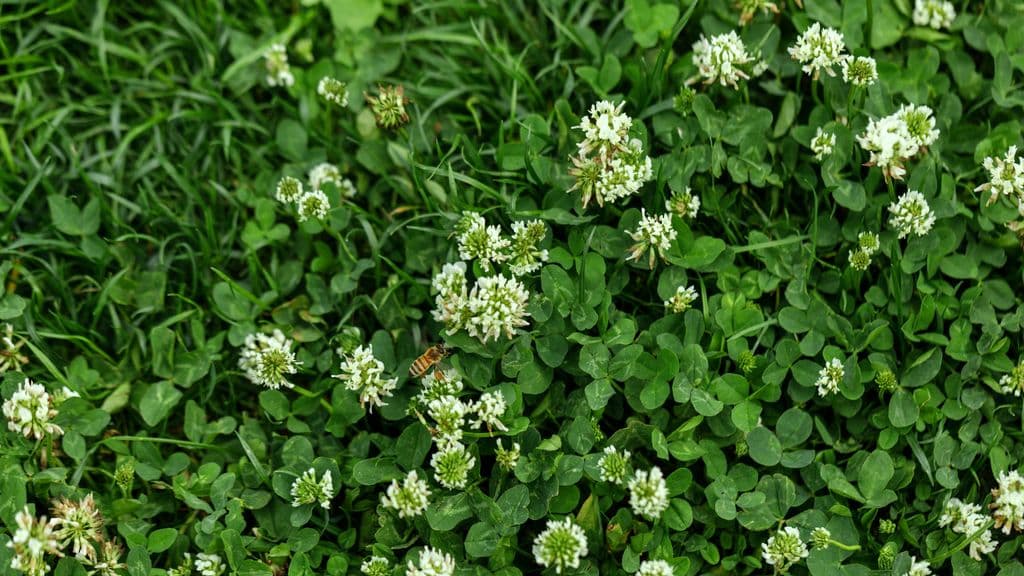
This is your TopGrass guide to weeds with white flowers!
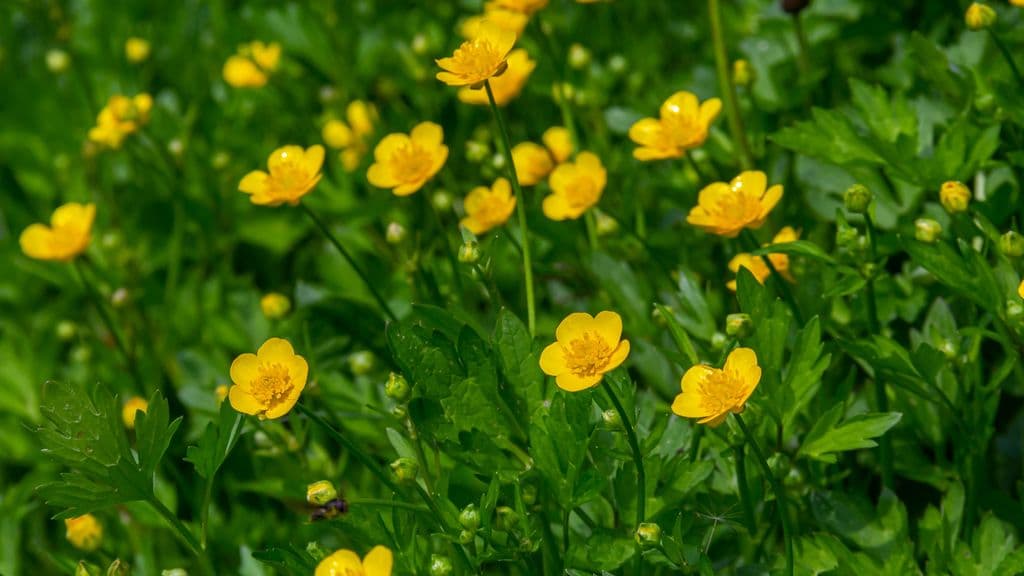
This is your TopGrass guide to weeds with yellow flowers!