
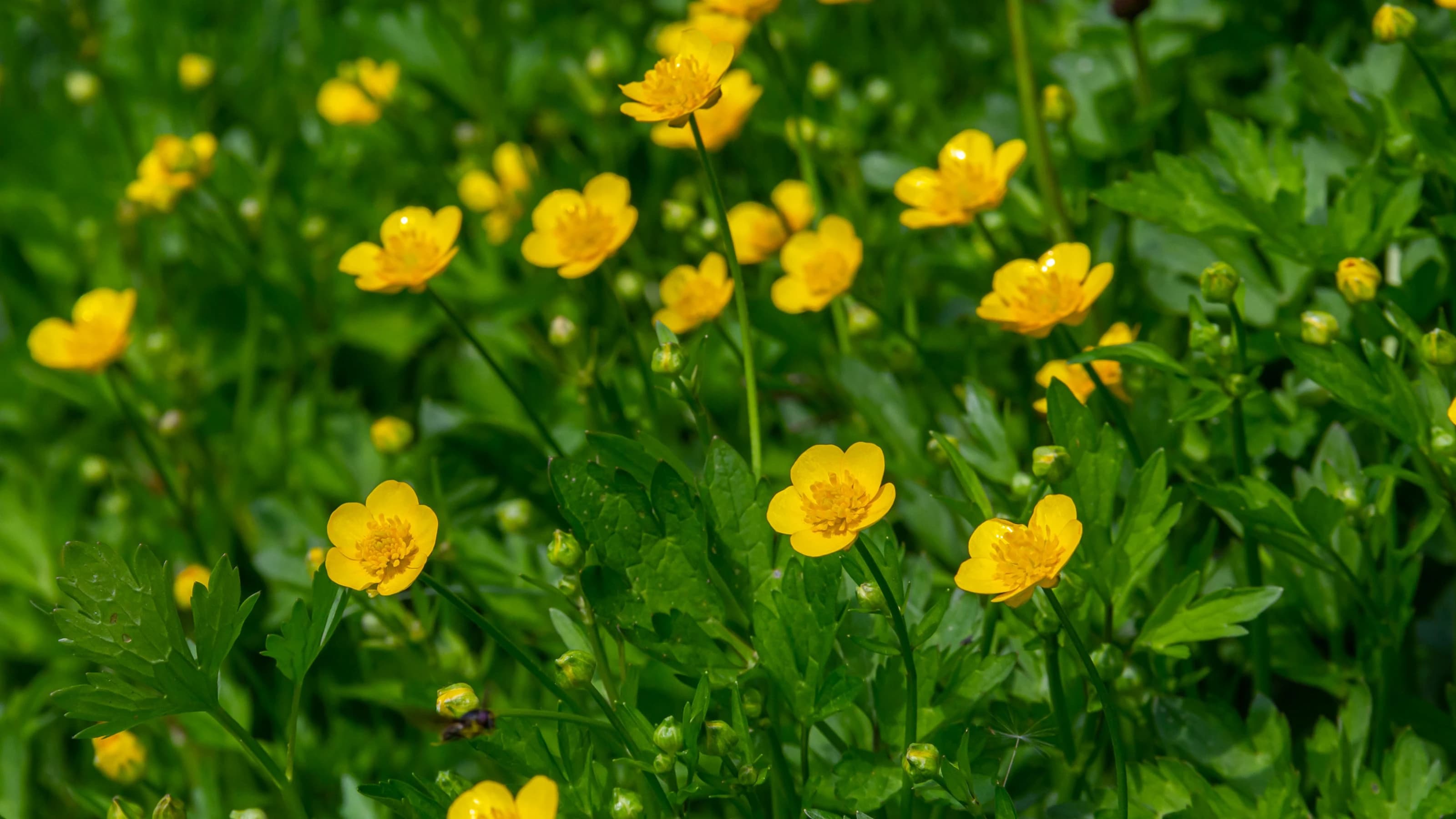
This is your TopGrass guide to weeds with yellow flowers!
Weeds with yellow flowers are a common sight in UK lawns and gardens. While some may look cheerful, many are invasive, deep-rooted, and difficult to remove. From yellow flowering lawn weeds like dandelions and creeping buttercup to lower-growing weeds such as lesser trefoil, understanding these species is key to maintaining a healthy lawn. This guide covers the most common yellow-flowered weeds, the issues they cause, and how to control them effectively
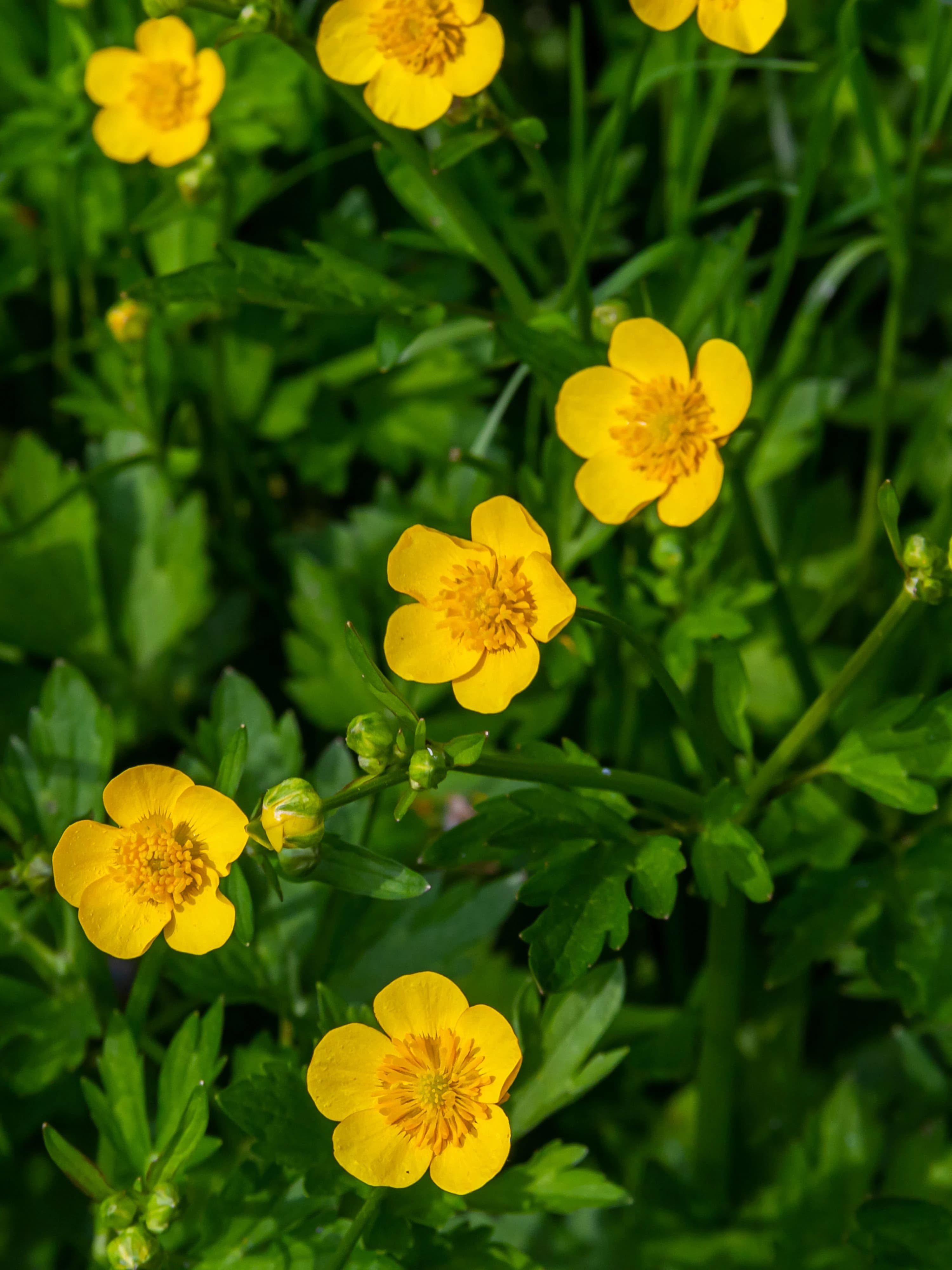
The creeping buttercup is one of the most common weeds, which is recognisable through its waxy, sunny yellow flower head.
The most prominent growing period is during spring. They typically flower from May to September
Creeping buttercups thrive most in wet or waterlogged lawns. This is because these conditions help it to actively grow and spread through the weeds runners.
Saturated soil helps its roots to embed deeply and form an extensively distributed rooting system of long runners. This deep rooting system means that the weed is difficult to remove by hand.
You can tackle creeping buttercups in spring by using a wire-toothed rake to reveal the runner roots of the buttercup so that they can be mowed.
Regular aerating of the lawn can help to improve the drainage and reduce compaction, this will help to prevent wet conditions that creeping buttercup thrives in.
Selective weed control, which is a part of both our Early Season Treatment and Mid-Season Treatment, can help to tackle creeping buttercup.
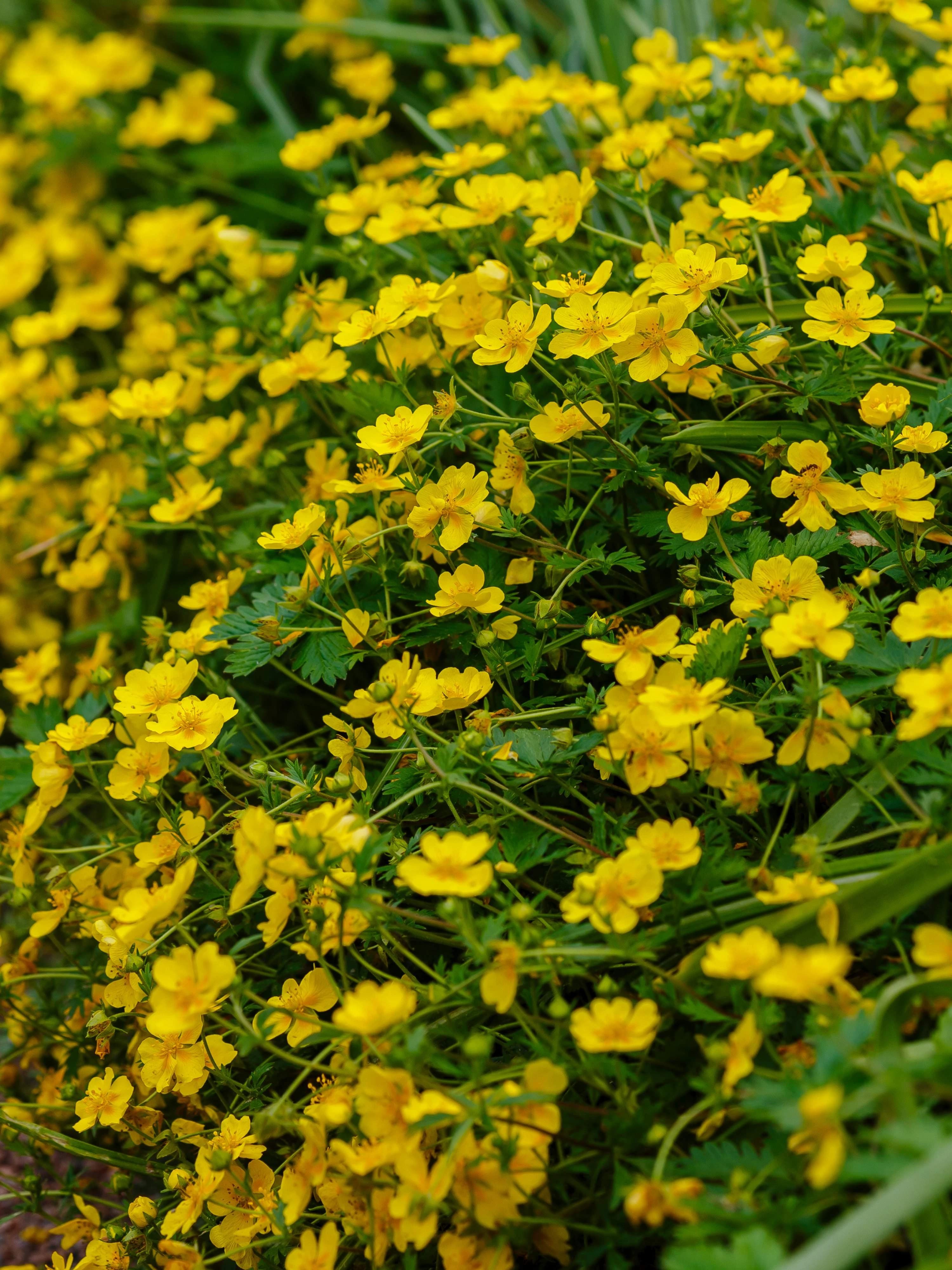
The creeping cinquefoil can be identified through its 5-petaled, yellow flower head. Cinquefoil in english means five leaves and this is another key identifier of the creeping cinquefoil.
The creeping cinquefoil flowers in the summer and early autumn months, approximately from June to September
Similarly to the creeping buttercup, the creeping cinquefoil grows and spreads through its runners. It can grow even in dry, poor soil conditions as it is drought tolerant.
The creeping cinquefoil rooting system consists of taproots which are roots that grow vertically up to 30cm deep into the ground. This system of deep roots makes the removal of this weed difficult.
You can dig out this plant using specialised hand tools that are designed to help remove deep-rooted weeds.
Selective weed control, which is a part of both our Early Season Treatment and Mid-Season Treatment, can help to tackle creeping cinquefoil.
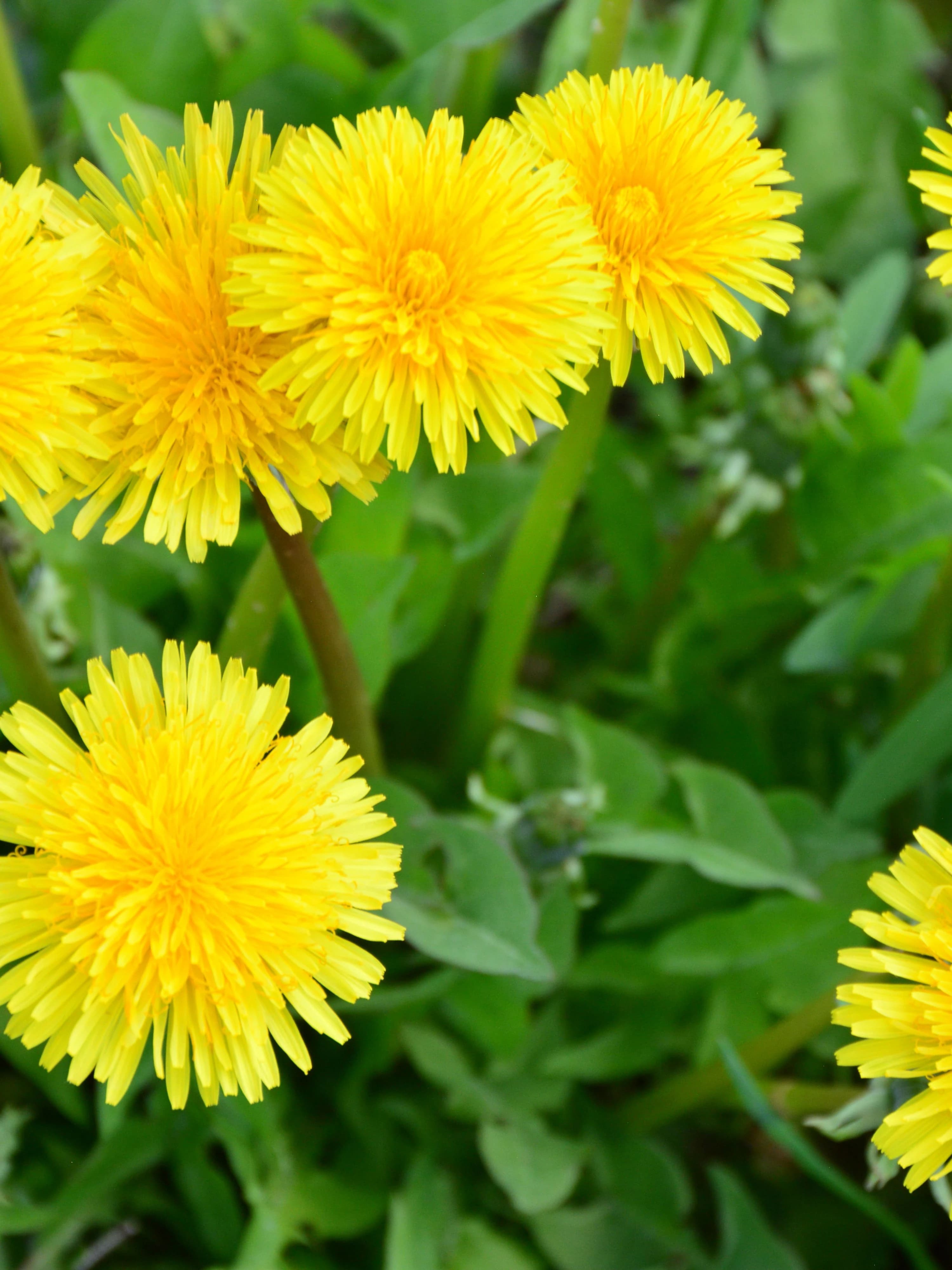
The dandelion is one of the most recognisable weeds in lawns. The features of the dandelion are its bright and yellow flower head, dark green ribbed leaves, and its spherical seeding head.
The dandelion flowers throughout spring to autumn, approximately from March to October.
Dandelions, like creeping cinquefoil, grow taproots which helps them to quickly embed themselves into lawns.
The dandelion is commonplace within lawns and is a difficult weed to remove through digging out due to their long tap roots and if a fragment of the root is left in the soil, the dandelion can regenerate. Additionally, the substantial number of seeds that can be dispersed by dandelions means that they can easily reproduce.
Deadheading dandelions can help to prevent the spread of their seedlings that can potentially be blown across your lawn.
Selective weed control, which is a part of both our Early Season Treatment and Mid-Season Treatment, can help to tackle dandelions.
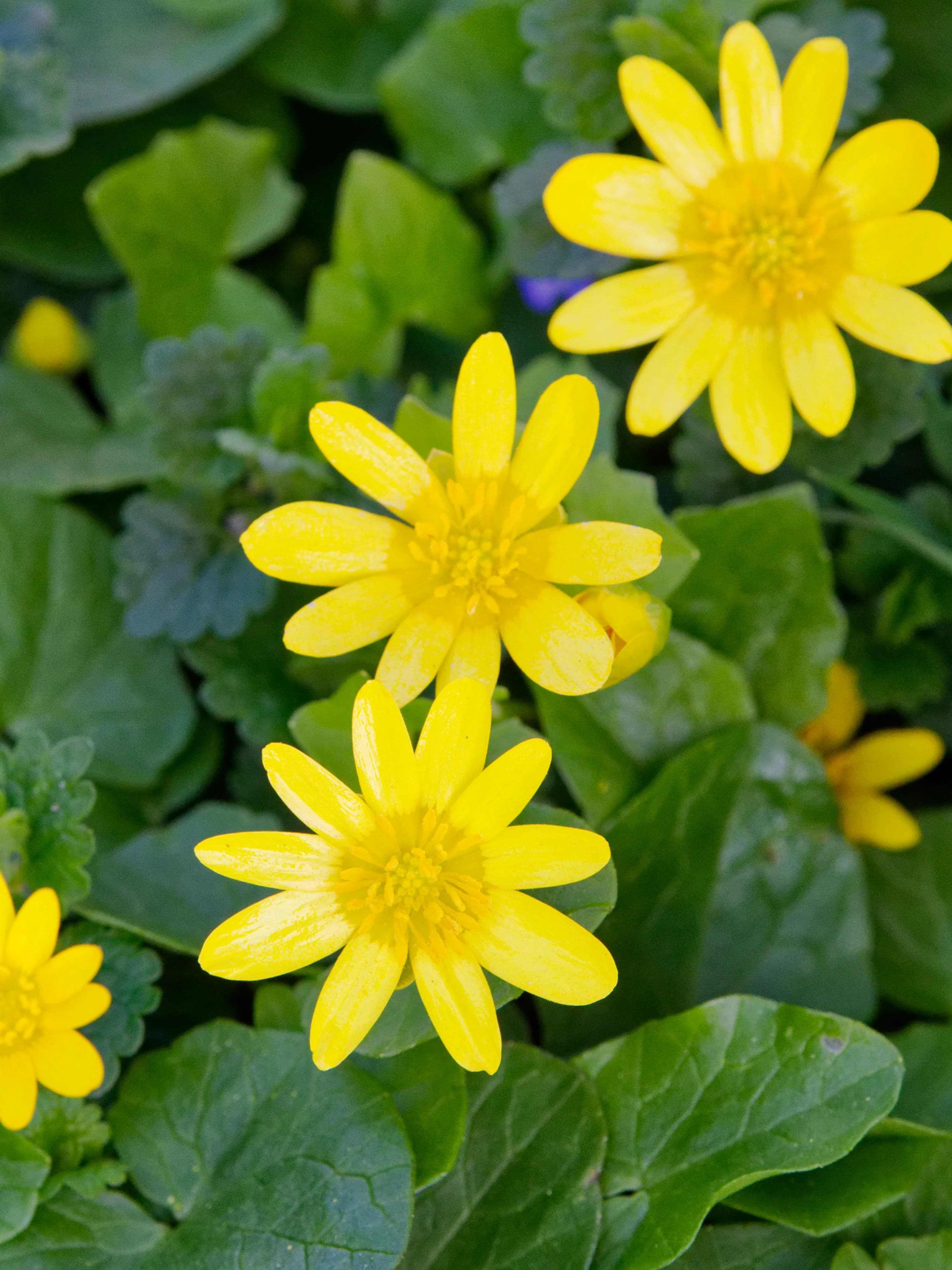
Lesser celandine can be identified by its shiny, cordate leaves which are on the end of long stalks. Its flowers are a radiant yellow with eight to twelve oval-shaped petals.
Their main growing period is in the springtime between late February and late April. They flower during March or April.
Lesser celandine spreads through root tubers, which when disconnected can then produce new plants.
Lesser celandine can develop and grow carpet-like across lawns when growing in soil that is shaded and rich in nutrients
Lesser celandine is a stubborn weed and can take multiple applications of weedkiller to control completely. Selective weed control, which is a part of both our Early Season Treatment and Mid-Season Treatment, can help tackle lesser celandine.
A general improvement of your lawn's health will help to prevent lesser celandine from spreading by boosting the strength of your grass. Our Annual Lawn Care Programme can help build up your lawn's strength.
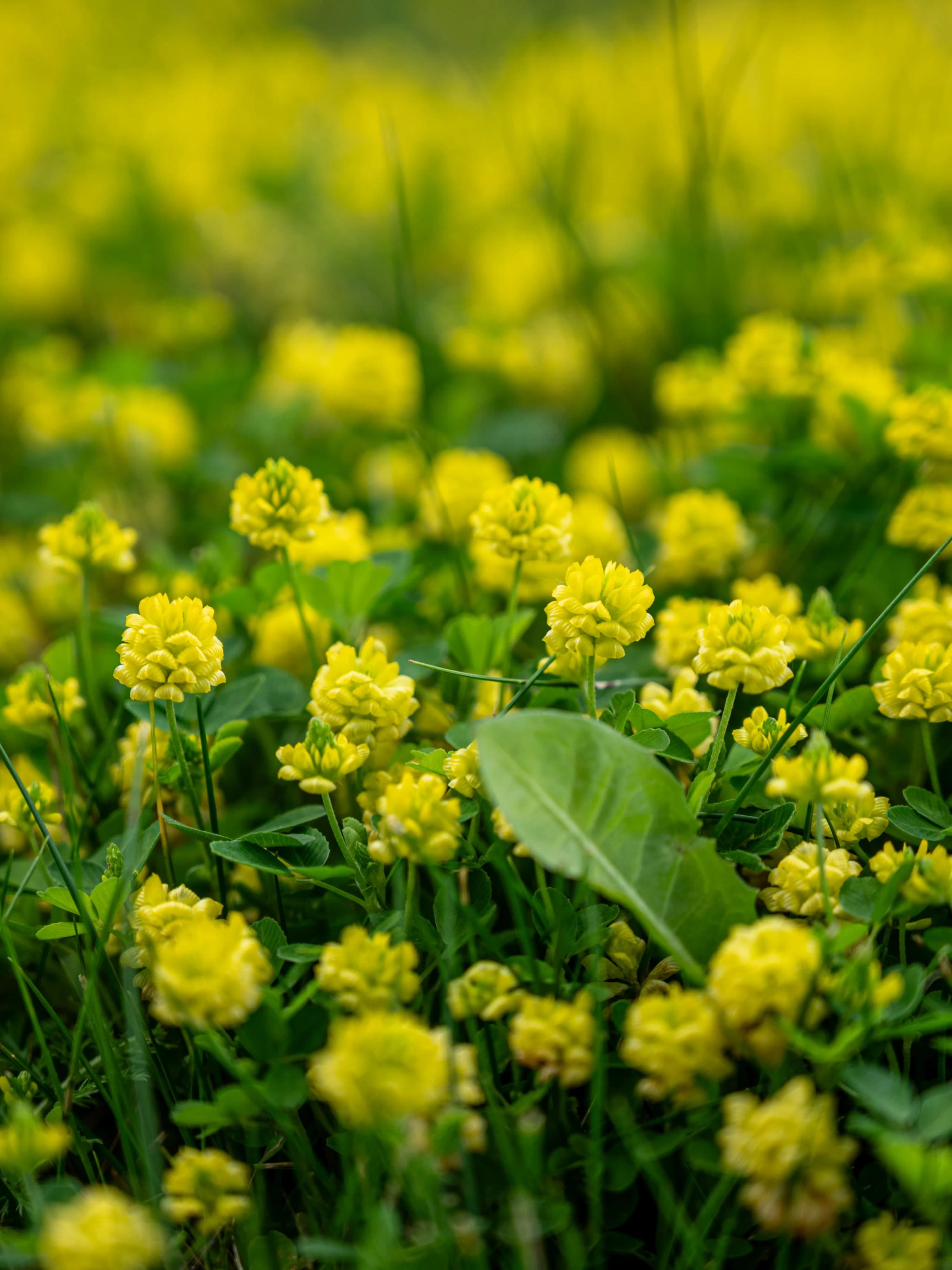
The lesser trefoil is a member of the clover family of weeds. It can be identified by its oval-shaped leaves as well as its yellow, suckling clover flowerhead.
The main flowering period for the lesser trefoil is late spring to late summer, from May to October.
It is a low-growing weed that creeps across lawns developing into thick matted patches of wiry, intertwined stems
The carpet-like nature of lesser trefoil means that it can survive a low mow making Lesser Trefoil a difficult one to control
Lesser Trefoil prospers most when growing in soils that are deficient in essential nutrients. Our fertiliser applications that are a part of our Annual Lawn Care Programme will help to provide your lawn's soil with those vital nutrients to help prevent lesser trefoil from flourishing.
Selective weed control, which is a part of both our Early Season Treatment and Mid-Season Treatment, can help to tackle lesser trefoil.
Practical lawn care tips from the Top Grass team.
Marketing Manager
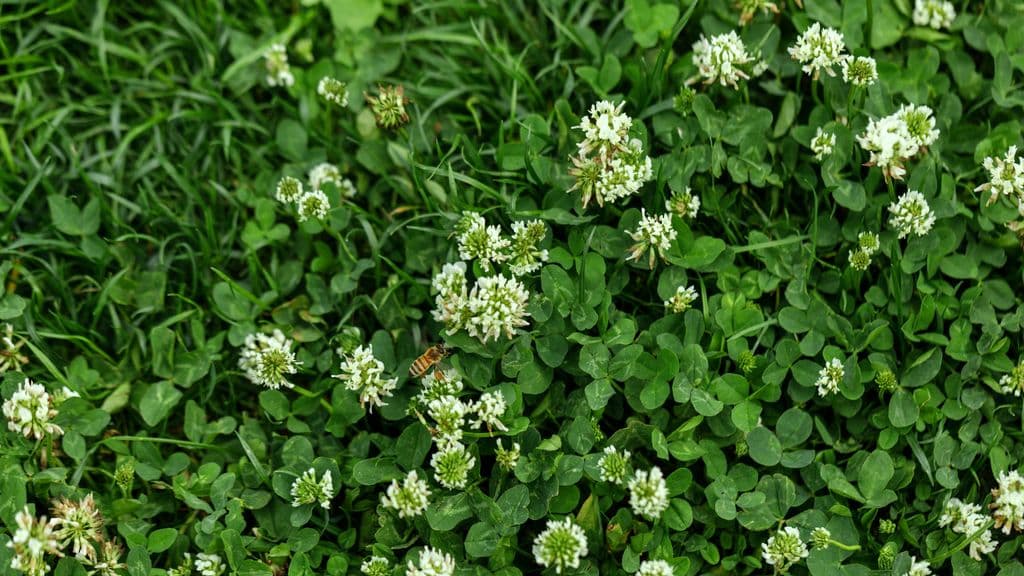
This is your TopGrass guide to weeds with white flowers!
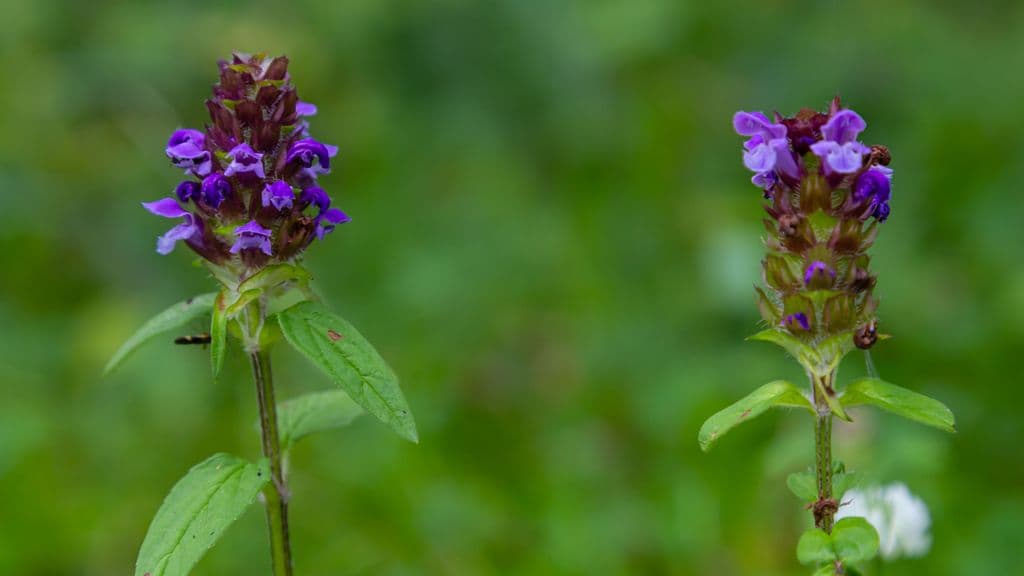
This is your TopGrass guide to weeds with pink/purple flowers!
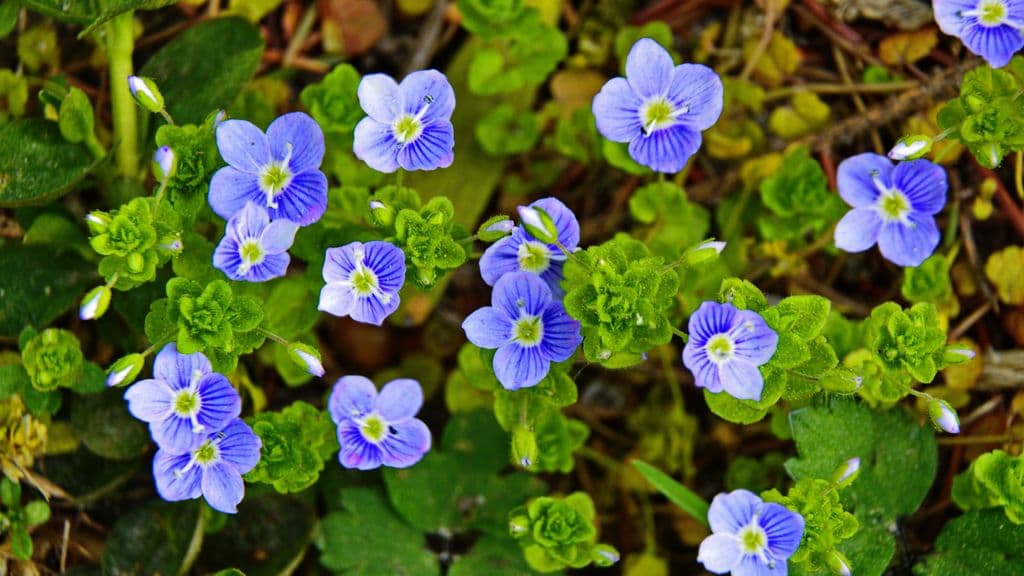
This is your TopGrass guide to weeds with blue flowers!